
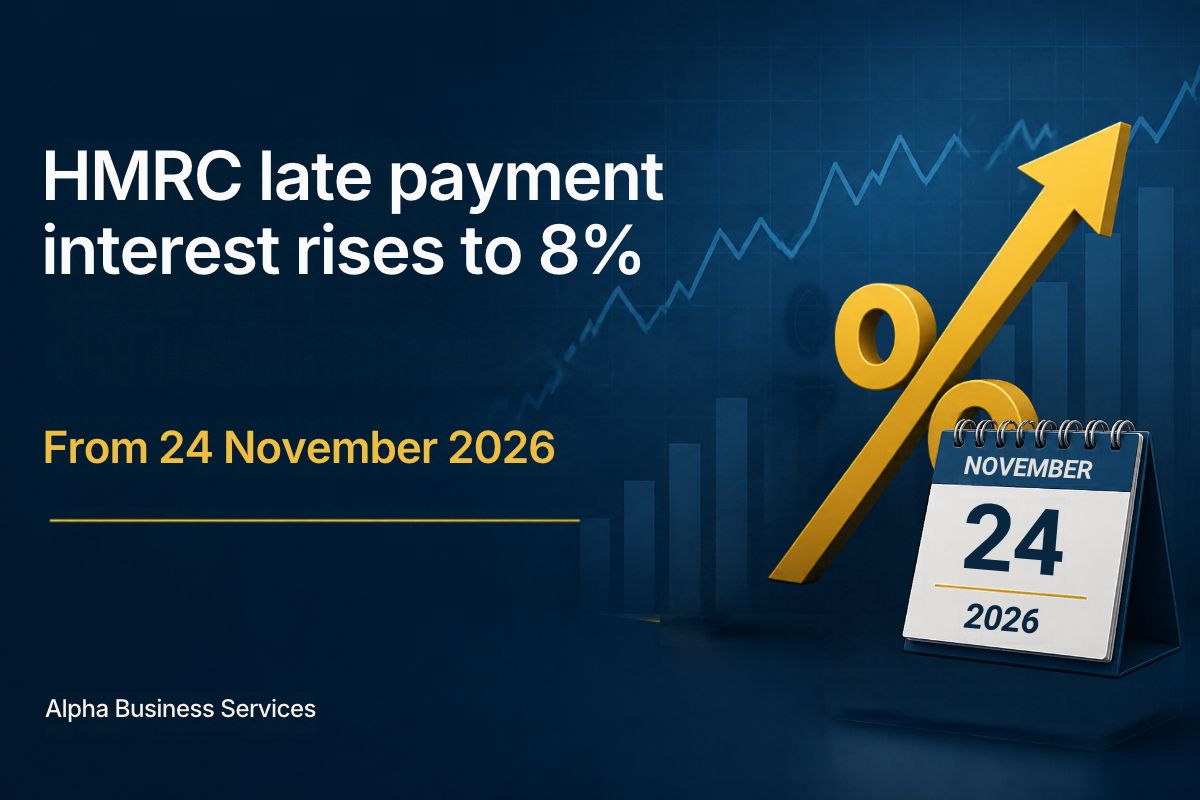
From 24 November 2026, HMRC charges 8% a year interest on most late tax payments, up from 7.75%. The rise follows the Bank of England’s increase in Bank Rate to 4.00% on 5 November 2026. Repayment interest – what HMRC pays you on overpaid tax – rises to 3%. For businesses carrying tax debts, borrowing from HMRC is now more expensive than many commercial overdrafts.
What’s changed
HMRC’s interest rates are linked to Bank Rate by formula: late payment interest is Bank Rate plus 4%, and repayment interest is Bank Rate minus 1% (with a 0.5% minimum). When the Monetary Policy Committee raised Bank Rate from 3.75% to 4.00%, HMRC confirmed in its interest rates update of 6 November 2026 that its rates would follow.
- Late payment interest: 8% (previously 7.75%)
- Repayment interest: 3% (previously 2.75%)
The 8% and 3% figures are calculated using HMRC’s stated formula; check HMRC’s official interest rate tables for the published figures for each tax.
Remember that interest is not a penalty – it is charged on top of any late payment penalties, and it is not tax-deductible for individuals. For companies, late payment interest on corporation tax is generally deductible as a loan relationship debit, but that is little comfort at 8%.
Who it affects
- Self-employed people and landlords with unpaid self assessment balances or payments on account.
- Companies paying corporation tax late, and large companies in the quarterly instalment payment regime.
- VAT-registered businesses under the late payment interest regime introduced in 2023.
- Employers with overdue PAYE and National Insurance.
- Anyone in a Time to Pay arrangement – interest continues to accrue on the outstanding balance.
Key dates
- 5 November 2026 – Bank Rate raised to 4.00%.
- 16 November 2026 – new rates apply to corporation tax quarterly instalment payments.
- 24 November 2026 – new rates apply to all other late payments and repayments.
- 31 January 2027 – self assessment balancing payment for 2025/26 and first payment on account for 2026/27.
What you should do now
- List every outstanding HMRC liability across your taxes and work out the interest cost at 8%.
- Compare that with your bank’s overdraft or loan rate – it may be cheaper to borrow commercially and clear HMRC.
- If you cannot pay in full, contact HMRC early about a Time to Pay arrangement. It will not stop interest, but it can prevent penalties escalating and enforcement action.
- Plan now for 31 January 2027. If your 2026/27 income is falling, consider whether a claim to reduce payments on account is justified – but be careful, because interest is charged if you reduce them too far.
- Check whether HMRC owes you money – overpaid tax earns repayment interest at only 3%, so claim it back promptly.
Our tax service can review your HMRC position and model the cash-flow impact.
Frequently asked questions
Is late payment interest the same as a penalty?
No. Interest compensates HMRC for the delay and runs from the due date until payment. Penalties are separate charges for paying or filing late, and both can apply to the same debt.
Does a Time to Pay arrangement stop interest?
No. Interest continues to accrue on the outstanding balance under a Time to Pay arrangement, but keeping to the agreement generally protects you from further late payment penalties and enforcement.
Will the rate change again?
Yes, if Bank Rate changes. HMRC’s rates are linked to Bank Rate by formula, so they follow any future Bank of England decision shortly afterwards.
Talk to us about your tax payments
If you have tax to pay and want to keep interest and penalties to a minimum, contact Alpha Business Services. We will help you plan payments, negotiate with HMRC and protect your cash flow.
Disclaimer: This article is general information only and does not constitute professional advice. It is correct as at 23 November 2026. Please take advice on your specific circumstances before acting.